Prize for Creation and Research in Architecture
The Grantham Foundation’s Prize for Creation and Research in Architecture is given annually to a researcher or artist. The prize includes a $5,000 grant and a three-weeks residency at the Foundation. The winner is selected by a jury of experts in the worlds of architecture and the environment.
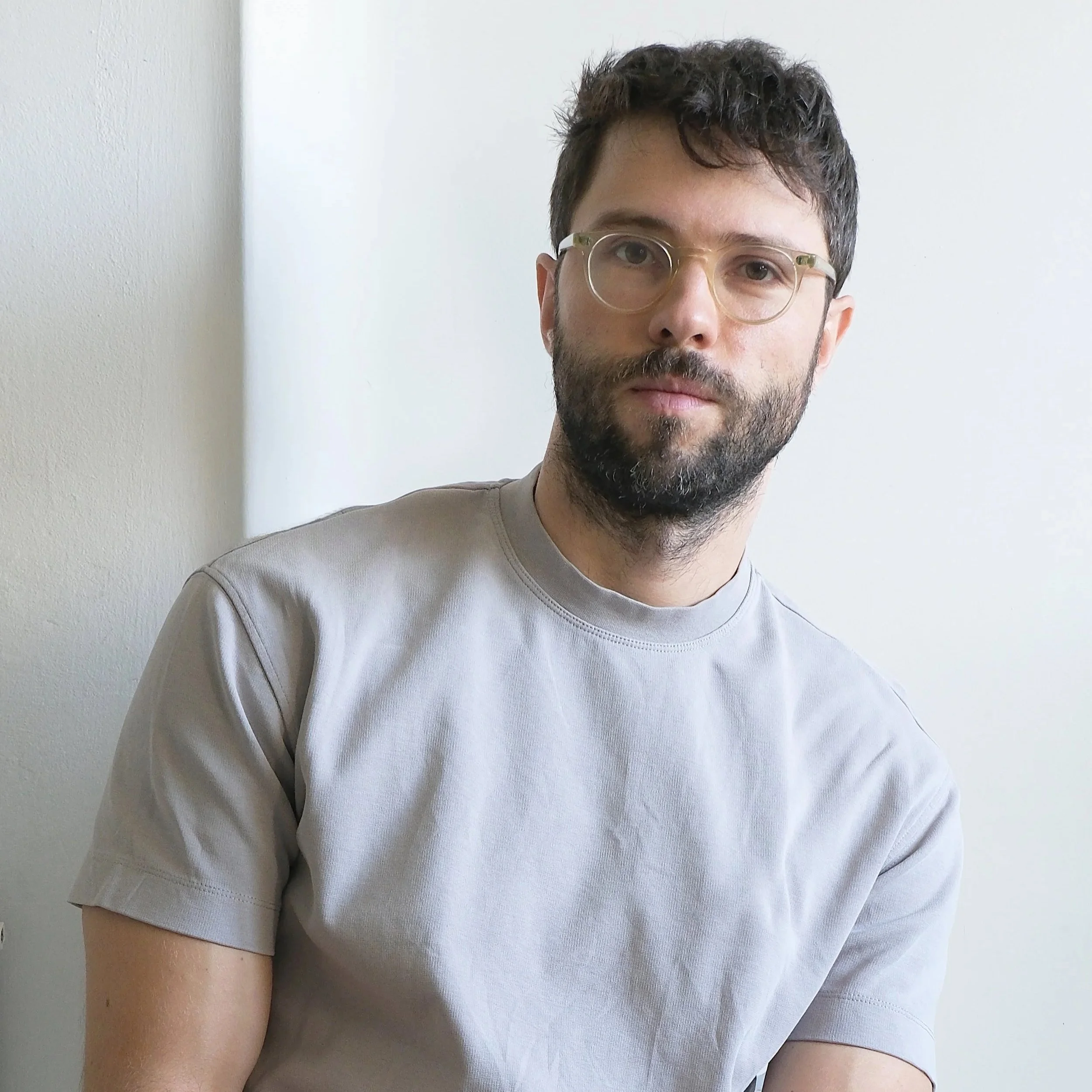
2027 Winner — Tadeáš Říha
Tadeáš Říha is a registered architect practising between London and Prague. His work spans community, residential and industrial buildings, exhibition-making, and curatorial practice, establishing collaborations across architecture, sustainable engineering, and culture. In his research, Tadeáš investigates architectures as hardened situations of political and economic power, where built structures and living organisms coalesce. He co-curated Weak Monument, the Estonian National Pavilion at the 16th Venice Architecture Biennale, examining the political significance of pavement. His research project Steel Cities investigated outsourced logistical landscapes in northwest Bohemia.
Insurable Grounds examines the progressive withdrawal of property insurance as an indicator of how probable future climate catastrophes already exist in the built reality of the present. The project positions insurability as a critical infrastructural condition that actively determines and reorganizes territory across scales, at times exercising greater authority than policy and generating effects more consequential than conventional forms of design. As insurance becomes unavailable, prohibitively expensive, or contingent on state intervention, territory ceases to function as property in any operative sense. Architectural practice is familiar with insurance as a nondescript but persistent design mechanism. By assembling, mapping and representing cases of insurance withdrawal in Québec, the project examines the expanded territorial scale at which insurance acts today.
To find out more about Tadeáš Říha: https://tadeasriha.cargo.site
2026 Winners — Julia Jamrozik and Coryn Kempster
Julia Jamrozik and Coryn Kempster are Toronto-based designers, artists and educators who have collaborated since 2003. Together they create spaces and objects that interrupt everyday situations in critically engaging and playful ways. As a multidisciplinary practice, they operate at a variety of scales, from temporary installations to permanent public artworks and architectural projects. Their artistic practice focuses on ‘social infrastructures’ which seek to build community by fostering playful interactions in physical space. Their academic research interests include the role of play in the built environment and alternative methods of documentation as a form of historic preservation.
During their residency at the Foundation, they will be investigating how different material strategies including reusing, repurposing, renting and recycling, could lead to a network of ecologically responsible ‘social infrastructures.’
To find out more about Julia Jamrozik and Coryn Kempster: https://www.ck-jj.com/
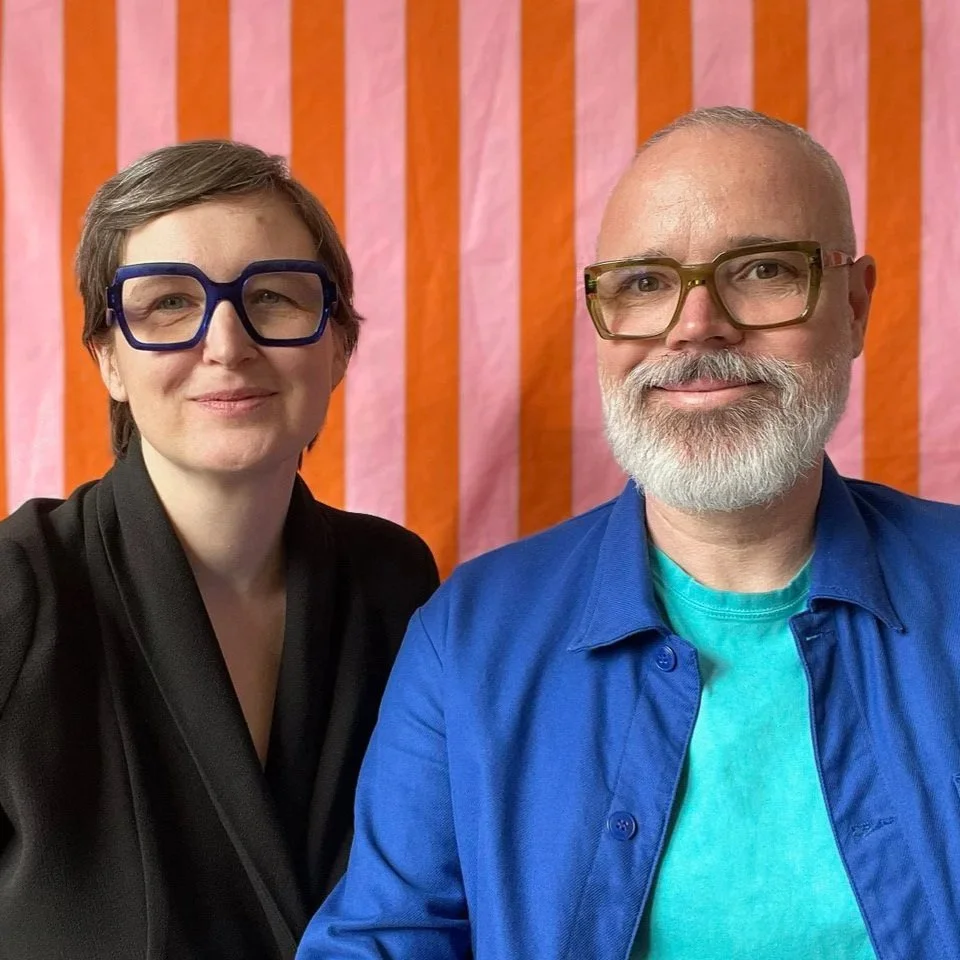
Photo credit: Julia Jamrozik and Coryn Kempster
2025 Winners – DAVIDSON RAFAILIDIS
Stephanie Davidson and Georg Rafailidis work together as DAVIDSON RAFAILIDIS. The interest underlying much of their work is the friction between the original design intentions for spaces and buildings, and the much richer built reality and unpredictable lives that buildings inevitably have. In most of their work, they study existing built conditions—sometimes these studies evolve into built works and sometimes the studies take the form of documentation (drawings, photographs, writing). Both Davidson and Rafailidis are currently faculty members at the Knowlton School of Architecture at Ohio State University.
They plan to take their time at Saint-Edmond-de-Grantham to observe, firstly, the space of the residency, which is primarily a wooded area—a kind of environment that doesn’t necessarily call for architecture in a conventional sense. With the conviction that space is wild, they will work on architectural expressions that take the location as an invitation to imagine architecture as non-static, responsive, alive, idiosyncratic, temporal: the opposite of the stark duality that is often captured by images of a small hut in a forest. The anticipated outcome is a non-typological spatial gesture that allows for the wildness of architectural space.
To find out more about DAVIDSON RAFAILIDIS, click here.

Photo credit: LouLou Rafailidis
Winner 2024 — Camille Lefebvre
Based in Tio'tia:ke/Montreal, Camille Lefebvre is an architect with a multidisciplinary practice at the crossroads of two main axes: housing in density and issues of architectural representation in the digital age. She holds bachelor's and master's degrees in architecture from the Université de Montréal and is the recipient of numerous awards and scholarships. She was a finalist for the Canada Council's Prix de Rome in Architecture (Emerging Practitioners).
Her research and creation project at the Foundation in June 2024 aims to take a critical and constructive look at the sprawl of Quebec's towns and villages. Taking the Grantham Foundation and nearby villages as a starting point, the project is part of a desire to sensitively densify Quebec's urban fabric, caught between the housing crisis and the climate emergency. These issues will be addressed by the model as a vector of research-creation with a dual function: as an act of design and as a mediation tool for a wider public.
To find out more about Camille Lefebvre, click here.

Photo credit: Villedepluie / André Rainville, 2023.
2023 Winners — Sébastien Roy and Jérémie Dussault-Lefebvre
Originally from Montreal, Sébastien Roy and Jérémie Dussault-Lefebvre shared university studies in Montreal (BAC) and Vancouver (M.ARCH), followed by professional experiences in Europe (Berlin, Milan, Brussels). Having imagined, designed, built and published projects together in Canada and abroad, Sébastien and Jérémie naturally decided to establish themselves as official collaborators following their repeated partnerships. Their stay abroad has allowed them to multiply their learning, particularly during their time at institutions such as TU Delft, the Porto Academy, the University of Nairobi and the University of Malta.
Using the Foundation building as an object of study during their residency and following a two-stage approach (inventory and recomposition), the duo aim to privilege a methodology of prospecting and producing alternative visions of the site, as if they were proposing to "deconstruct" and "reconstruct" the pavilion. With a view to environmental exhaustion, working with the existing building, its surroundings and heritage is at the heart of their audacious proposal.

Portrait of Sébastien Roy and Jérémie Dussault-Lefebvre. Photo credit: Éléa Jeanne